
教授許立群老師
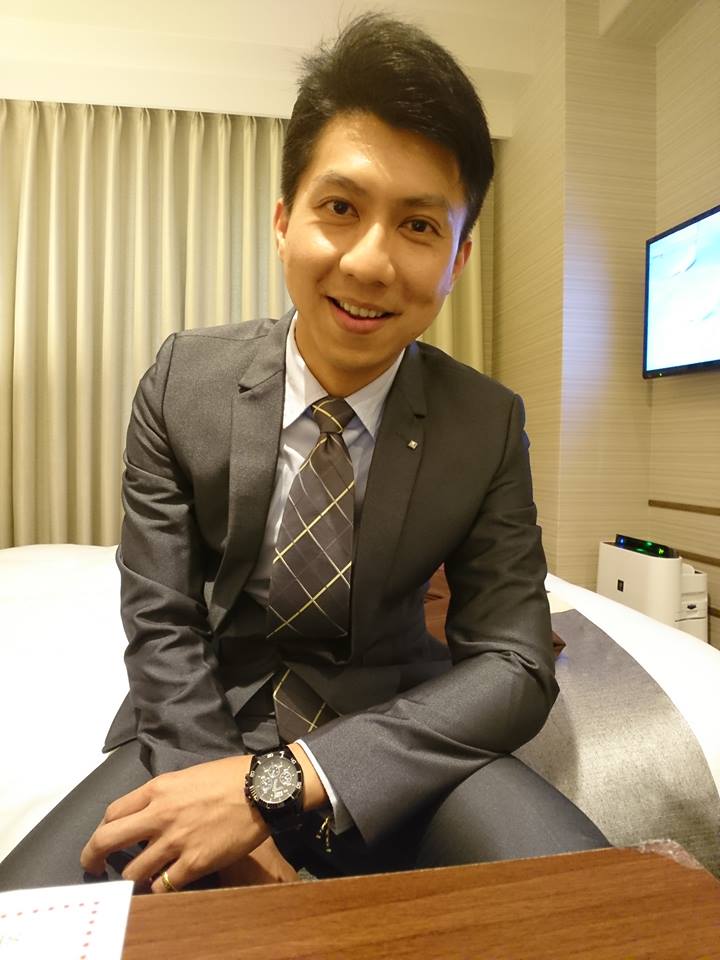
許立群 教授
學 歷:國立東華大學 企業管理學系 管理學博士
專 長:網路休閒行為研究、觀光與行銷管理、節慶與會展活動管理、人力資源管理
聯絡電話:089-517842 分機 3612
E-mail:lchsu@nttu.edu.tw
一、學歷
國立東華大學 企業管理學系 管理學博士(2009/02 ~ 2012/12)
主修:行銷;副修:人力資源與組織行為
二、現職
主聘/國立臺東大學文化資源與休閒產業學系 教授(2021.08.01 ~ 迄今)
從聘/國立臺東大學全校不分系學士學位學程 教授(2024.08.01 ~)
三、工作經歷
- 國立臺東大學文化資源與休閒產業學系 教授兼教學發展中心主任(2021.08.01 ~ 2025.02.01)
- 國立臺東大學文化資源與休閒產業學系 副教授兼教學發展中心主任(2020.08.01 ~ 2021.07.31)
- 國立臺東大學文化資源與休閒產業學系 副教授兼教務處副教務長(2019.02 ~ 2020.07.31)
- 國立臺東大學文化資源與休閒產業學系 副教授兼教學發展中心主任(2019.02 ~ 2020.07.31)
- 國立臺東大學文化資源與休閒產業學系 副教授兼招生策略中心主任(2018.11 ~ 2019.09)
- 國立臺東大學師範學院 助理教授 兼院長特助(2016.02 ~ 2017.02)
- 國立臺東大學文化資源與休閒產業學系 助理教授(2016.02 ~ 2018.07)
- 大葉大學 休閒事業管理學系 助理教授(2013/08/01 ~ 2016/02/01)
四、專案計畫補助
校外計畫案 — 連續十二年獲得國科會補助計畫(含多年期)
- 103 年度國科會專題研究計畫:品牌社群能貢獻於企業?朝向一個整合社群互動關係模型之研究(核定計畫編號:103-2410-H-212-013-),執行期間:2014/09/01 ~ 2014/08/31,核定補助金額:573,000 元。
- 104 年度國科會專題研究計畫:品牌傳播者傳遞佳音之漣漪效應—一個品牌企業如何與粉絲建立關係的多元觀點(核定計畫編號:104-2410-H-212-006-),執行期間:2015/08/01 ~ 2016/07/31,核定補助金額:450,000 元。
- 105 年度國科會專題研究計畫:為品牌企業創造忠實粉絲—品牌熱情雙元模型的概念化、前因、結果與外向性人格為調節變項之整合模型探討(核定計畫編號:105-2410-H-143-019-),執行期間:2016/08/01 ~ 2017/07/31,核定補助金額:600,000 元。
- 106-107 年度國科會專題研究計畫:線上社會傳染力—社群成員態度渲染效果前因、後果與態度轉化機制之整合模型探討(核定計畫編號:106-2410-H-143-002-MY2),執行期間:2017/08/01 ~ 2019/07/31,核定補助金額:1,295,000 元。《多年期計畫》
- 108-109 年度國科會專題研究計畫:線上評論態度的影響力—前因、後果之影響歷程與轉化機制之整合模式研究(核定計畫編號:108-2410-H-143-016-MY2),執行期間:2019/08/01 ~ 2021/07/31,核定補助金額:1,208,000 元。《多年期計畫》
- 110-112 年度國科會優秀年輕學者計畫:社交媒體網紅行銷之品牌效益與適得其反—線上心理契約建立與違犯前因、後果與移轉機制之整合(核定計畫編號:110-2628-H-143-001-MY3),執行期間:2021/08/01 ~ 2024/07/31,核定補助金額:2,370,000 元。《多年期計畫》
- 113-114 年度國科會專題研究計畫:廣告數位轉型!打開社群媒體廣告溝通效果的光明面與黑暗面(核定計畫編號:113-2410-H-143-012-MY2),執行期間:2024/08/01 ~ 2026/07/31,核定補助金額:1,936,000 元。《多年期計畫》
校外計畫案 — 教育部補助計畫
- 107-111 年 USR 計畫(萌芽型):臺東 Y 計畫—共創部落好旅遊,協同主持人;教育部大學社會責任實踐計畫。
- 112-113 年 USR 計畫(深耕型):臺東 Y2 計畫—共創山海沙城好未來,協同主持人;教育部大學社會責任實踐計畫。
- 110 年度教學實踐研究計畫:運用 CDIO 教學模式探究大學生環境負責任行為歷程與轉變(核定計畫編號:PSR1100488),執行期間:2021/12/01 ~ 2022/11/31,核定補助金額:172,500 元。學門/專案:大學社會責任 USR。
- 112 年度教學實踐研究計畫:運用 CDIO 教學模式融入大一新鮮人微專題專案之環境公民行為評估(核定計畫編號:PSK1120233),執行期間:2023/08/01 ~ 2024/07/31,核定補助金額:200,000 元。學門/專案:大學社會責任 USR。
- 113 年度教學實踐研究計畫:共構責任觀光思維融入 CDIO 教學與任務導向學習模式之永續行為評估(核定計畫編號:PSR1133811),執行期間:2024/08/01 ~ 2025/07/31,核定補助金額:243,000 元。學門/專案:大學社會責任 USR。
指導國科會大專學生專題計畫補助
- 106 年度大專學生研究計畫:地方發展另類觀光的環境負責任行為研究(106-2813-C-143-007-H),執行期間:2017/07/01 ~ 2018/02/28,補助金額:48,000 元,學生:廖育萱。
- 107 年度大專學生研究計畫:地方發展責任觀光的觀光客環境行為研究(107-2813-C-143-002-H),執行期間:2018/07/01 ~ 2019/02/28,補助金額:48,000 元,學生:陳佳品。
- 108 年度大專學生研究計畫:部落山林旅遊體驗對遊客親環境行為研究—遊客-環境關係的中介角色(108-2813-C-143-032-H),執行期間:2019/07/01 ~ 2020/02/28,補助金額:48,000 元,學生:陳昱璇。
- 108 年度大專學生研究計畫:遊客對於黑暗觀光認知與情感體驗歷程之研究(108-2813-C-143-033-H),執行期間:2019/07/01 ~ 2020/02/28,補助金額:48,000 元,學生:張簡裕弘。
- 110 年度大專學生研究計畫:遊客環境負責任行為及願付意願之研究(110-2813-C-143-024-H),執行期間:2021/07/01 ~ 2022/02/28,補助金額:48,000 元,學生:蕭燕雯。
- 111 年度大專學生研究計畫:溯溪活動遊憩者—環境契合度對心流體驗、幸福感與負責任環境行為之研究:遊憩專門化的調節角色(111-2813-C-143-018-H),執行期間:2022/07/01 ~ 2023/02/28,補助金額:48,000 元,學生:陳翔一。
- 113 年度大專學生研究計畫:盡興更盡責!運用責任觀光觀點探究遊客認同歷程與環境行為關係(113-2813-C-143-024-H),執行期間:2024/07/01 ~ 2025/02/28,補助金額:58,000 元,學生:鄭介卜。
五、近十年學術著作
(一)期刊(SSCI/SCI/TSSCI 文章,共計 40 篇)
- Wen-Hai Chih, Kai-Yu Wang, Li-Chun Hsu, I-Shin Cheng (2012). From Disconfirmation to Switching: An Empirical Investigation of Switching Intentions After Service Failure and Recovery. The Service Industries Journal, 32(8), 1305-1321. (SSCI)
- Li-Chun Hsu*, Kai-Yu Wang, Wen-Hai Chih (2013). Effects of Web Site Characteristics on Customer Loyalty in B2B E-commerce — Evidence from Taiwan. The Service Industries Journal, 33(11), 1-25. (SSCI)
- 池文海、許立群*(2013)。會員制網站成員黏著意圖之決定因素研究:以華人第一時尚美容網站 Fashion Guide 為例。電子商務學報, 15(2), 265-294。【科技部管理學門專業類 TSSCI 期刊 A 級】
- Wen-Hai Chih, Kai-Yu Wang, Li-Chun Hsu & Su-Chen Huang (2013). Investigating eWOM Effects on Online Discussion Forums: The Role of Perceived Positive eWOM Review Credibility. Cyberpsychology, Behavior, and Social Networking, 16(9), 658-668. (SSCI)
- Kai-Yu Wang, Li-Chun Hsu & Wen-Hai Chih (2014). Retaining Customers after Service Failure and Recovery: A Contingency Model. Managing Service Quality, 24(4), 318-338. (SSCI)
- 池文海、許立群*、林庭妤 (2014)。從品牌社群成員相似性觀點探討社群公民行為之研究。電子商務學報, 16(4), 407-436。【TSSCI A 級】
- Li-Chun Hsu* (2014). The Influence of Quality of Information System Success (ISS) on Customer Intention to Continue Use in B2B E-commerce: A Contingency Approach of System Anxiety. Research Journal of Business Management, 8(4), 353-366. (ASCI / SCOPUS)
- Li-Chun Hsu*, Wen-Hai Chih, Ju-Hsuan Lin (2014). Understanding Social Network Sites Users' Willingness to Provide Information. Pensee Journal, 76(6), 295-307. (SSCI)
- Dah-Kwei Liou, Li-Chun Hsu* & Wen-Hai Chih (2014). Understanding broadband television users' continuance intention to use. Industrial Management & Data Systems, 115(2), 210-234. (SCI, Q1)
- Wen-Hai Chih, Dah-Kwei Liu & Li-Chun Hsu* (2015). From Positive and Negative Cognition Approach to Explore E-Shoppers' Real Purchase Behavior: An Application of Tricomponent Attitude Model. Information Systems and e-Business Management, 13(3), 495-526. (SSCI)
- 許立群*、池文海、林庭妤 (2015)。品牌-顧客關係、社群成員-其他成員關係對社群公民行為的影響:多重中介效果檢驗。電子商務學報, 17(1), 49-90。【TSSCI A 級】
- Pei-Wen Liao, Li-Chun Hsu* (2014). Engineers' manpower quality promotion and arrangement plan model: A case of the Fu Tsu construction company. Issues in Business Management and Economics, 2(2), 16-23. (EBSCO)
- Li-Chun Hsu, Pei-Wen Liao (2015). From Job Characteristics to Job Satisfaction of Foreign Labor in Taiwan's Construction Industry: The Mediating Role of Organizational Commitment. Human Factors and Ergonomics in Manufacturing & Service Industries, 26(2), 243-255. (SSCI)
- Li-Chun Hsu*, Wen-Hai Chih & Dah-Kwei Liu (2015). Understanding community citizenship behavior in social networking sites: An extension of the social identification theory. Industrial Management & Data Systems, 115(9), 1752-1772. (SCI, Q1)
- Dah-Kwei Liou, Wen-Hai Chih, Li-Chun Hsu* & Chia-Yi Huang (2016). Investigating information sharing behavior: The mediating roles of the desire to share information in virtual communities. Information Systems and e-Business Management, 14(2), 187-216. (SSCI)
- Li-Chun Hsu, Kai-Yu Wang, Wen-Hai Chih, Kuan-Yu Lin (2015). Investigating the Ripple Effect in Virtual Communities: An Example of Facebook Fan Pages. Computers in Human Behavior, 51(A), 483-494. (SSCI)
- Li-Chun Hsu*, Dah-Kwei Liou & Wen-Hai Chih (2016). Investigating community members' eWOM effects in Facebook fan page. Industrial Management & Data Systems, 116(5), 1-29. (SCI, Q1)
- 林淑芬、許立群*(2016)。消費者自我一致性、品牌情感依附對購買意圖影響之實證研究—名人形象代言之干擾效果。顧客滿意學刊, 12(2), 139-168。
- Li-Chun Hsu*, Dah-Kwei Liou (2017). Maintaining customer-brand relationships in mobile industry: The mediation effects of brand relationship benefits and quality. International Journal of Mobile Communications, 15(4), 388-413. (SSCI)
- Li-Chun Hsu* (2017). Investigating community members' purchase intention on Facebook fan page: From a dualistic perspective of trust relationships. Industrial Management & Data System, 117(5), 766-800. (SCI, Q1)
- Wen-Hai Chih, Li-Chun Hsu*, Dah-Kwei Liou (2017). Understanding virtual community members' relationships: From individual, group and social influence perspectives. Industrial Management & Data System, 117(6), 990-1010. (SCI, Q1)
- Li-Chun Hsu* (2018). Investigating Effect of Service Encounter, Value, and Satisfaction on Word of Mouth: An Outpatient Service Context. International Journal of Environmental Research and Public Health, 15(1), 132. (SSCI, Q2)
- Li-Chun Hsu*, Kai-Yu Wang, Wen-Hai Chih (2018). Investigating virtual community participation and promotion from a social influence perspective. Industrial Management & Data System, 118(6), 1229-1250. (SCI, Q1)
- Li-Chun Hsu* (2019). Building brand–fan relationships in social commerce contexts: mediators of online brand relationships. Journal of Theoretical and Applied Electronic Commerce Research, 14(2), 1-18. (SSCI)
- Li-Chun Hsu* (2019). How to make loyal fans in virtual communities: Evidence from the Facebook Fan Pages of smartphones. Journal of Theoretical and Applied Electronic Commerce Research, 14(3), 168-189. (SSCI)
- Li-Chun Hsu* (2019). Investigating the brand evangelism effect of community fans on social networking sites: Perspectives on value congruity. Online Information Review, 43(5), 842-866. (SSCI)
- Li-Chun Hsu* (2020). Antecedents and consequences of attitude contagion processes: The example of apparel brand fan pages. Journal of Product & Brand Management, 29(1), 31-51. (SSCI,國科會管理二學門推薦期刊)
- Kai-Yu Wang, Wen-Hai Chih & Li-Chun Hsu (2020). Building Brand Community Relationships on Facebook Fan Pages: The Role of Perceived Interactivity. International Journal of Electronic Commerce, 24(2), 211-231. (SSCI,全球電子商務排名第一的學術期刊)
- Kai-Yu Wang, Wen-Hai Chih, Li-Chun Hsu* & Wei-Ching Lin (2020). Investigating apology, perceived firm remorse and consumers' coping behaviors in the digital media service recovery context. Journal of Service Management, 31(3), 421-439. (SSCI,服務管理頂尖期刊)
- Wen-Hai Chih, Li-Chun Hsu*, Jaime Ortiz (2020). The antecedents and consequences of the perceived positive eWOM review credibility. Industrial Management & Data Systems, 120(6), 1217-1243. (SCI, Q1)
- Li-Chun Hsu, Kai-Yu Wang, Wen-Hai Chih & Wei-Ching Lin (2021). Modeling revenge and avoidance in the mobile service industry: moderation role of technology anxiety. The Service Industries Journal, 41(15-16), 1029-1052. (SSCI)
- Li-Chun Hsu* (2021). Personality and eating behavior in a food festival: Understanding visitors' loyalty from the perspective of food-related personality traits. International Journal of Culture, Tourism, and Hospitality Research, 15(4), 457-476. (Emerging SCI)
- Li-Chun Hsu* (2022). Effect of eWOM review on beauty enterprise: a new interpretation of the attitude contagion theory and information adoption model. Journal of Enterprise Information Management, 35(2), 376-413. (SSCI)
- 何慶華*、許立群(2022)。熟年遊客長宿休閒需求潛力評估與驗證。旅遊健康學刊, 21(1), 39-58。
- 許立群*、趙予(2023)。曇花一現?還是旅遊再現!新興旅遊目的地選擇之影響歷程與情境因素的多元論證觀點:推拉動機理論觀點應用。管理學報, 40(4), 441-477。(TSSCI,國科會管理學門推薦第一級期刊)
- Li-Chun Hsu* (2023). Enhancing relationship strategies with the live stream influencers. Marketing Intelligence and Planning, 41(2), 141-155. (SSCI)
- Li-Chun Hsu*, Hsin-Yi Kao (2023). From SNS stressors perspectives to understand prosocial behavior: A contingency model. Journal of Contemporary Marketing Science, 6(3), 165-188.
- Li-Chun Hsu*, Si-Yung Hu (2024). Antecedents and consequences of the trust transfer effect on social commerce: The moderating role of customer engagement. Current Psychology, 43, 4040-4061. (SSCI)
- Li-Chun Hsu* (2024). An integrative model for online community citizenship behavior of luxury fashion brands on Instagram. Journal of Fashion Marketing and Management, 28(2), 357-378. (SSCI)
- Li-Chun Hsu* (2024). How to establish customers' green brand relationships and behaviors: From green consumption consciousness perspectives. Asia Pacific Journal of Marketing and Logistics, Accepted. (SSCI)
(二)研討會論文
- 池文海、許立群*、林庭妤(2013)。從社會認同觀點探討社群成員公民行為之影響:多重中介效果論證。2013 台灣統計方法學學會年會暨學術研討會,國立臺中教育大學,2013/10/26。
- 許立群*、池文海、林庭妤(2014)。從知覺社群與品牌相似性觀點探討影響社群成員公民行為之歷程。第十六屆電子商務與網路行銷學術研討會,國立臺北大學,2014/01/09。(榮獲優良論文獎)
- Wen-Hai Chih, Li-Chun Hsu, Kai-Yu Wang and Lin, K. (2014). The Mediating Role of Facebook Fan Pages. 19th Annual CyberPsychology, CyberTherapy & Social Networking Conference, Washington DC, June 17-19, 2014.
- 巫珮如、許立群(2014)。從業者線上品質觀點探討影響消費者團購行為之研究。2014 全國學生休閒、觀光、遊憩學術論文研討會,大葉大學,2014/06/21。
- 許立群*、張美玲、巫珮如(2014)。故事與意象:社區觀光軟硬體設施建置與活化。2014 年全國社區工作暨社區創意研討會,實踐大學,2014/11/21。
- 許立群*、張美玲(2014)。社區發展觀光建立遊客忠誠度之研究:觀光目的地意象觀點。2014 年全國社區工作暨社區創意研討會,實踐大學,2014/11/21。
- 許立群*、巫珮如(2014)。虛擬社群經營對社群成員團購意圖有影響?2014 中華民國科技管理學會年會暨論文研討會,中華大學,2014/12/11-12。
- Wen-Hai Chih, Kai-Yu Wang, Li-Chun Hsu*, Tzu-Lien Yuan (2015). Effects of Perceived Interactivity on Facebook Fan Page Users' Behavior Intentions. International Conference on Business and Internet (ICBI), Taipei, April 22-24, 2015.
- 許立群*、張美玲、李柏甫(2015)。社區發展觀光之觀光品質與環境資源評估:重要—表現程度分析法之運用。2015 節慶、遊戲與觀光國際學術研討會,國立臺灣師範大學,2015/04/24-26。
- Li-Chun Hsu and Pei-Wen Liao (2015). Investigating Thai Workers Job Satisfaction in Taiwan Construction Industry. 2015 兩岸地方公共治理與發展學術研討會,東海大學,May 2015.
- 許立群*、顏佳伶、謝宜玲、洪珍莉、林晉輝(2015)。休閒運動品牌人格對顧客品牌忠誠度之研究。2015 第十一屆全國學生休閒、觀光、遊憩學術論文研討會,大葉大學,2015 年 6 月。(榮獲優等論文獎)
- Li-Chun Hsu* (2015). Fans' Purchase Intention on Facebook Fan Page: From Trust-based Perspective. 2015 Annual Symposium on Management and Social Sciences, Osaka, Japan, Aug 2015.
- Li-Chun Hsu* (2016). Brand evangelism effects on Facebook fan pages. The 5th International Symposium on Business and Social Sciences (ISBSS), Okinawa, Japan, August 2-4.
- 許立群*、張美玲(2016)。洞察社區轉型與發展觀光之遊客忠誠度實證研究—以臺中市和平區烏石坑社區為例。2016 運動與節慶文化國際學術研討會,文藻外語大學,2016/10/14-16。(榮獲優等論文獎)
- Li-Chun Hsu, Wang, K. and Chih, W. (2017). Investigating Virtual Community Participation and Promotion from a Social Influence Perspective. Marketing Management Association Spring Conference, Chicago, USA, March 2017.
- Li-Chun Hsu* (2017). Does brand love really a mediator to bridge community members' brand purchase intentions? Annual Conference on Management and Social Sciences (2017 ACMASS), Osaka, Japan, August 14-16.
- Chih, W., Wang, K., Hsu, L. and Lin, W. (2018). Investigating Antecedents and Consequences of Anger After a Mobile Application Service Failure Occurs. Marketing Management Association Spring Conference, Chicago, April 2018. (Best paper award)
- Chih, W., Wang, K., Hsu, L. and Lin, W. (2018). Is An Apology Enough To Recover From A Mobile Application Service Failure? Global Marketing Conference, Tokyo, Japan, July 2018.
- 李柏甫*、許立群(2018)。運用資料包絡分析法衡量台灣上市櫃產業經營績效—以傳產觀光類股為例。2018 文化與休閒的創新樂活永續學術研討會,國立臺東大學,2018/05/18。
- Li-Chun Hsu* (2018). Exploring the causes and consequences of online attitude contagion of brand community fans. ISBSS, Singapore, August 28-30, 2018.
- 許立群、李柏甫*(2019)。從食品相關人格特質的雙面刃觀點形塑遊客忠誠度歷程。2019 文化與休閒學術研討會,國立臺東大學,2019/05/17。
- Li-Chun Hsu* (2019). Attitude Contagion Effects of Online Community Members on Facebook Apparel Brand Fan Pages. ISBSS 2019, Okinawa, Japan, July 1-3.
- 許立群、蔡佾旅*(2020)。客家庄遊客飲食體驗對遊客行為意圖影響之研究。2020 文化與休閒學術研討會,國立臺東大學,2020/05/22。
- 許立群、李柏甫*(2020)。東慢食節遊客忠誠度之實證:採品質-滿意-忠誠理論模型應用與延伸。2020 文化與休閒學術研討會,國立臺東大學,2020/05/22。
- Li-Chun Hsu* (2021). Effect of eWOM Review on Facebook Beauty Fan Pages. 2021 MMA Spring Virtual Conference, Wisconsin, USA, March 24-26.
- 何慶華*、許立群(2021)。朝向一個熟年遊客長宿休閒需求發展之研究。2021 第 23 屆休閒、遊憩、觀光線上學術研討會暨國際論壇,國立暨南國際大學,2021/09/25-26。
- Li-Chun Hsu* (2023). Market Segment Analysis and Marketing Strategy of Online Live Streaming Consumers. ICBMSS, Okinawa, Japan, July 26-28.
(三)專書(章)
- 許立群(2021)。《觀光行銷》,第十三章「目的地行銷」(專章)。華格納出版社。
- 許立群(2022)。《冬釀》—感受東臺灣的地方實踐力:魚菜共生實踐教師社群。USR 推動中心年度專書/焦點文摘專題文章單元。
(四)相關報導/專輯
- 許立群(2014)。最年輕的資深老師—大葉大學休閒系七年級助理教授許立群擁有五年教學經驗、研究論文頻頻獲獎。大葉大學公關事務暨校友服務中心。
- 許立群(2020)。行政、班導 3+3 難不倒—善用時間管理創造績效。東大電子報,國立臺東大學秘書室。
- 許立群、胡焯淳、賴亮郡、李玉芬、郭美女(2023)。高教深耕教學發展。國立臺東大學 75 週年校慶專輯,秘書室。(pp. 35-37)。另刊:研究創新—我在太平洋邊教學、研究與服務工作。(p. 76)
(五)專訪
- 東大花路米廣播節目專訪—高教深耕計畫創新教學模式。國立教育廣播電臺,2022/06/03。
- 家多一點愛專訪—許立群老師太平洋邊教學。國立教育廣播電臺,2022/07/15。
瀏覽數:
分享
 時間:週一至週五 08:30~17:30(例假日除外)
 電話:089-517831、089-517832、089-318855轉3601/3602
  傳真:089-517836
 24小時校安緊急專線:089-517119